Hail Damage Roof Replacement on a Texas Home
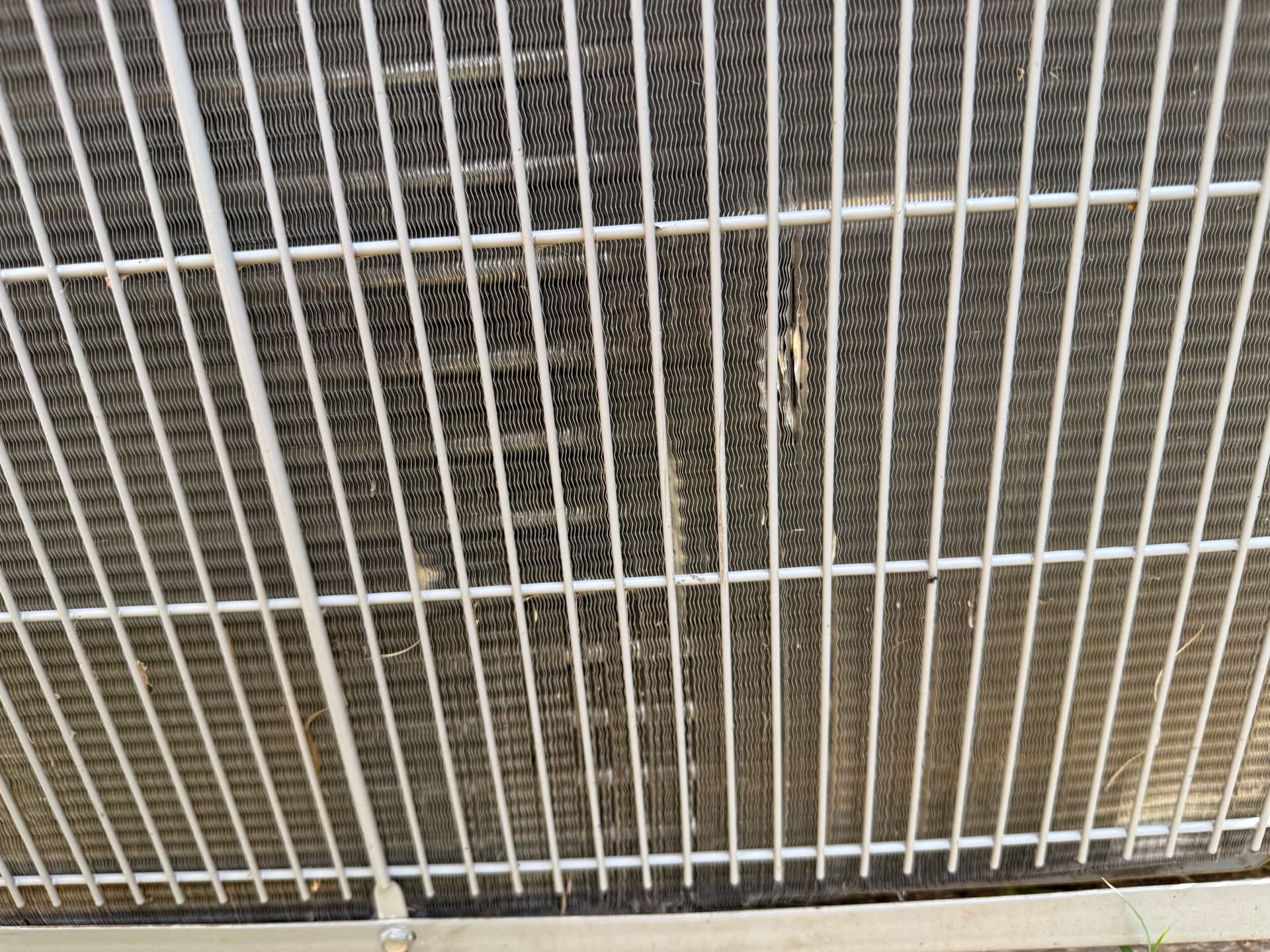
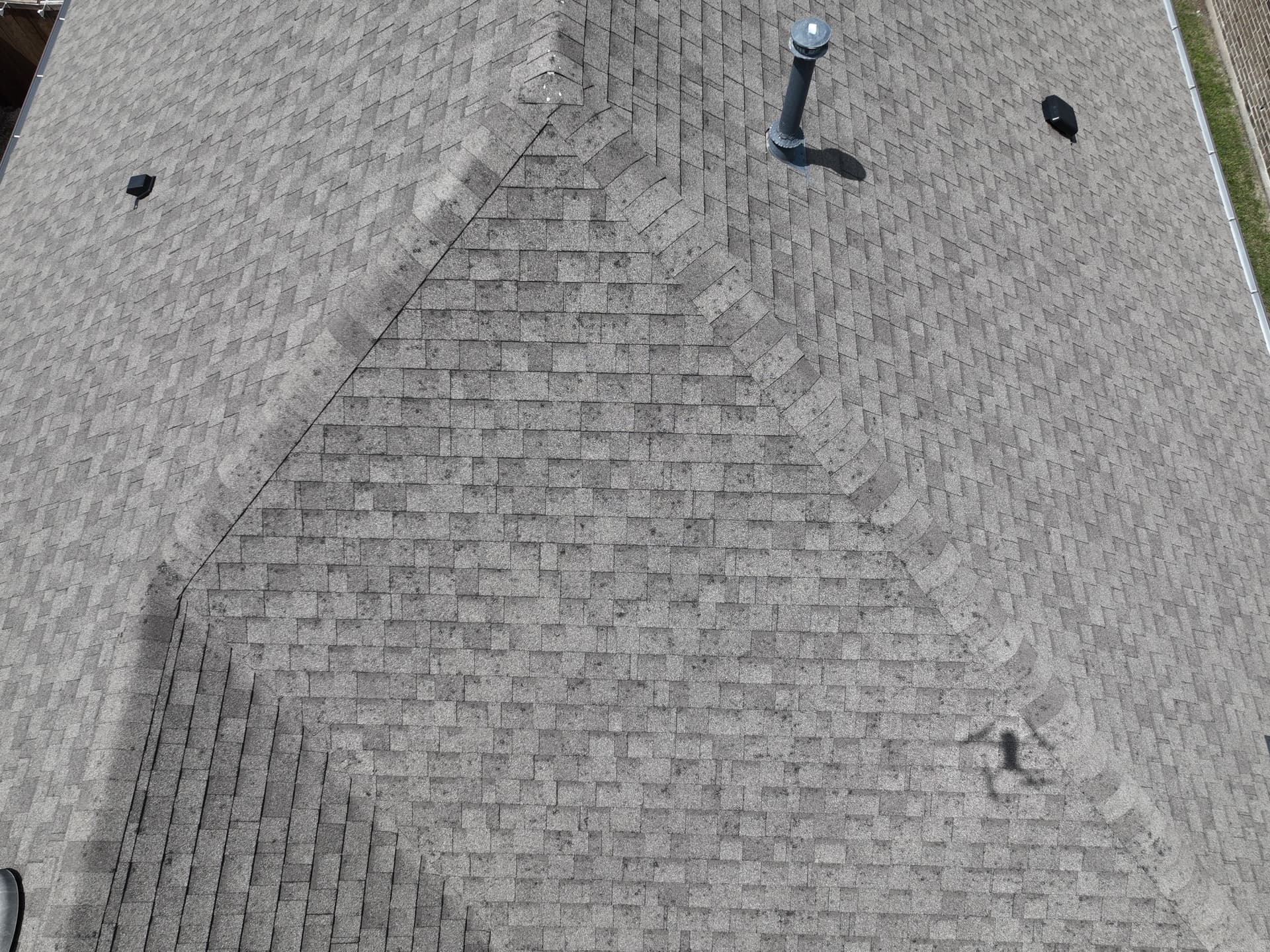
Hail doesn't knock - it just shows up and starts doing damage. And a lot of the time, homeowners don't even realize how bad it is until they get a closer look. That's exactly where we were with this home. The existing asphalt shingles had taken a beating, and the granule loss was spread across the entire surface. That's not cosmetic. Granule loss means the shingles are no longer protecting the roof deck the way they should.
Here's something a lot of people don't know - hail damage on a roof doesn't always mean visible holes or cracks. Most of the time, it shows up as dimpling and granule displacement that quietly shortens the life of your roof. Left alone, that leads to leaks, deck rot, and interior water damage. Getting it assessed early is what separates a manageable insurance claim from a full-blown repair nightmare.
For this home, the plan was straightforward - full tear-off and replacement with a new impact-resistant asphalt shingle roof. Impact-resistant shingles are rated to hold up better against hail than standard shingles, which matters a lot in areas that see regular storm activity. Going that route also often qualifies homeowners for a discount on their homeowner's insurance. It's one of those upgrades that pays for itself in more ways than one.
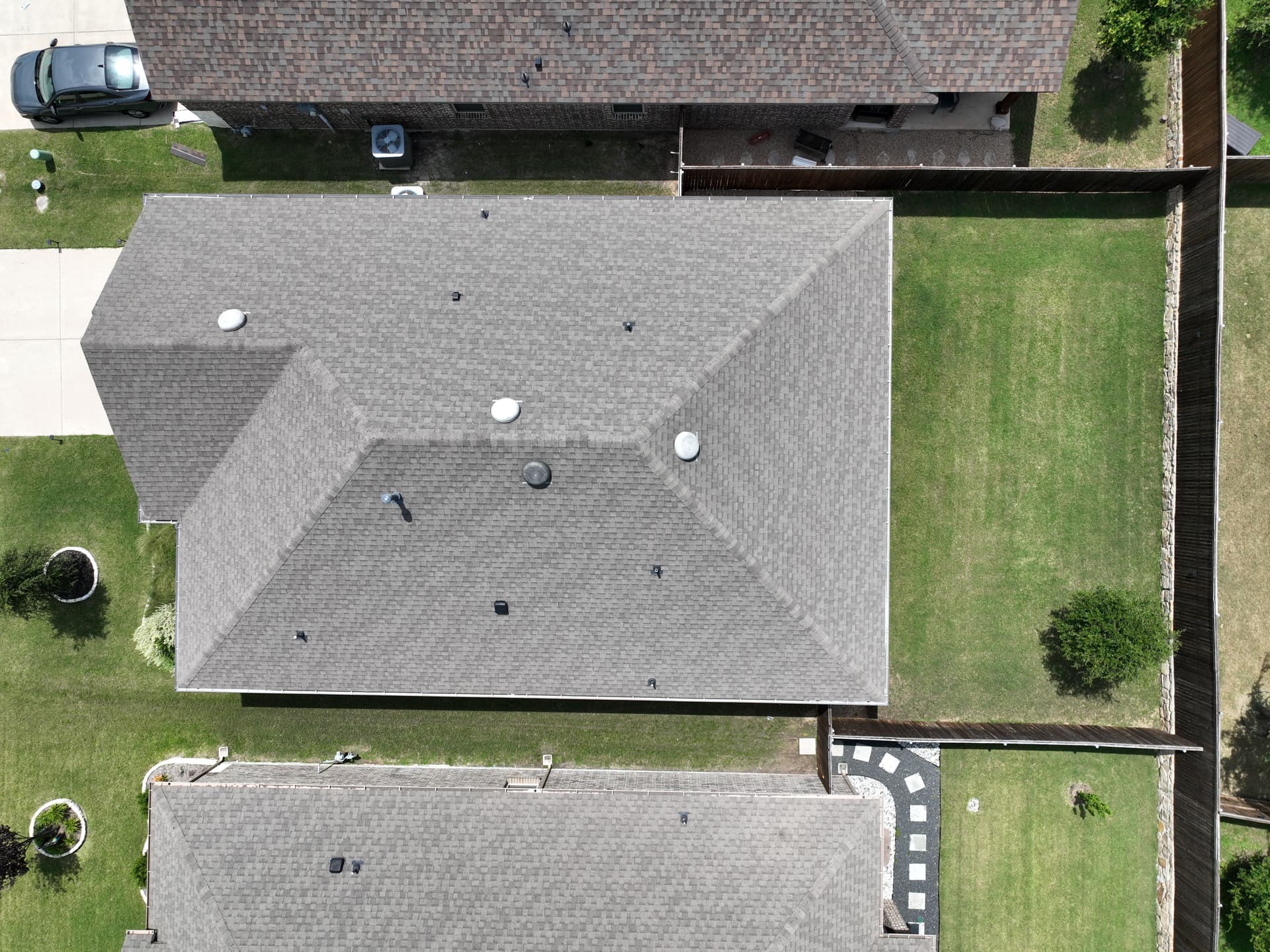
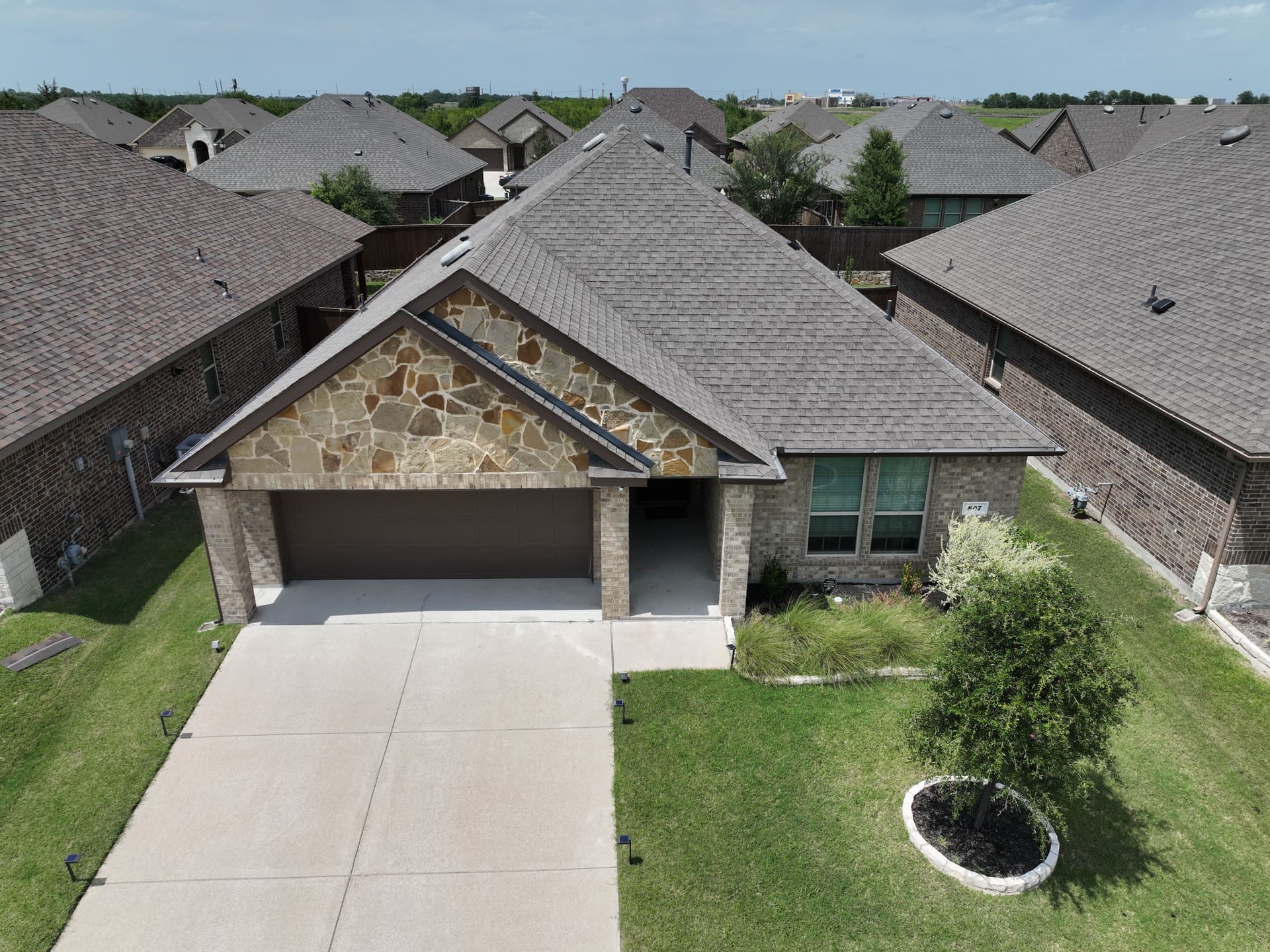
The finished roof sits clean across the entire hip layout, with crisp ridge lines and proper ventilation penetrations sealed and flashed correctly. The house itself has great curb appeal with the stone facade and well-maintained yard - and now the roof matches that level of care. Everything reads sharp and intentional from the street and from above.
If your home got hit in a recent storm and you haven't had the roof looked at yet, that's worth changing. Hail damage has a way of compounding quietly over time, and the sooner it gets documented and addressed, the better off you'll be - both structurally and from an insurance standpoint.